
A Guide to Cancer Treatment & Specialists
Looking for an Oncologist in Johor Bahru (JB), Malaysia?
If you or a loved one has just been diagnosed with cancer, one of the first questions that often comes up is: “Which oncologist is the best suited to treat my type of cancer?”
Cancer treatment today involves many different specialists and treatment approaches. Patients and families often want to know which oncologists have experience treating their specific cancer type, what treatment options are available, and what practical realities of the oncology landscape they should understand before making decisions.
Understanding these basics can help patients make more informed decisions and avoid unnecessary confusion during an already stressful time.
This guide shares general oncology-related information relevant to Malaysia, including the most common types of cancer, available treatment options, and the oncology landscape in Johor Bahru, where I practise:
The Most Common Cancers in Malaysia
Cancer patterns in Malaysia provide an overview of the cancers most frequently diagnosed in the country. These patterns are generally similar across many states, including Johor.
Most common cancers in women
-
Breast cancer
-
Colorectal cancer
-
Lung cancer
-
Corpus uteri cancer
-
Ovary cancer
Most common cancers in men
-
Colorectal cancer
-
Lung cancer
-
Prostate cancer
-
Liver cancer
-
Lymphoma cancer

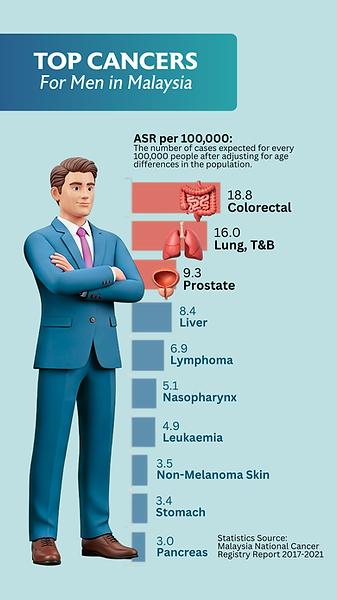
Hospitals and oncology centres in Johor Bahru commonly manage these cancers, which is why cancer treatment services in the region are well equipped to treat them.
What Happens After a Cancer Diagnosis?
Being diagnosed with cancer can feel overwhelming, and many patients are unsure what the next steps should be. In most cases, several stages of evaluation are needed before a treatment plan is decided.
The first step usually involves confirming the exact type of cancer through a biopsy and pathology report. Additional tests such as CT scans, MRI scans, PET scans, or blood tests may then be performed to determine the stage of the cancer and whether it has spread.
Once this information is available, the case is often discussed among different specialists including surgeons, oncologists, radiologists, and pathologists. This multidisciplinary discussion helps determine the most appropriate treatment plan for the patient.
Types of Cancer Treatments
How Oncologists Decide The Best Treatment Plan
Many patients do not fully understand why certain treatments are recommended. What they often know are common perceptions such as:
“Surgery is risky, I want options without surgery.”
“Chemotherapy is toxic and suffering, I want treatments without side effects.”
In modern oncology, cancer treatment is not chosen based on preference alone. Each treatment has a different medical role in controlling the disease - some remove the tumour, some destroy microscopic cancer cells, and others help control disease that has spread.
Oncologists therefore consider several important factors, weighing the pros and cons to choose a treatment plan that gives you the highest possible improvement. Here’s what your oncologist will consider:
-
Type of cancer
-
Stage of the disease
-
Tumour location and characteristics
-
Biological behaviour of the cancer
-
Patient’s overall health condition
-
Treatment goals (curative, disease control, or symptom relief)
In reality, treatment decisions must also consider practical factors such as the
-
Availability of medical resources
-
The patient’s preferences, recovery time, and financial affordability.
Below are some of the main treatment approaches used in modern oncology.

Surgery
➜ Often Used For The Intention To Cure
Surgery is often used when a tumour is localised (early-stage cancer) and can be removed completely. The goal is to remove the cancer while preserving as much normal tissue and organ function as possible.
When Surgery Is Considered
Doctors usually consider surgery by evaluating:
1. Resectability: Whether the tumour can be completely removed based on its size, location, and involvement with surrounding structures.
-
For example, in early-stage colorectal cancer, surgery may completely remove the tumour if it has not invaded nearby tissues. However, if the tumour involves the anal sphincter muscles, surgery may lead to permanent loss of bowel control and patient might require a lifelong stoma bag. In such cases, upfront treatments such as radiotherapy may be considered to downsize the tumour before surgery to help preserve sphincter function.
2. Operability: Whether the patient is medically fit to undergo surgery safely.
-
For example, an 80-year-old patient with multiple medical conditions may technically have a tumour that can be surgically removed. However, surgery may place significant stress on the body, and recovery may be difficult for frail patients. In such cases, radiotherapy or other treatments may be chosen instead, even if surgery could potentially achieve better curative rate. The decision must always balance treatment effectiveness with patient safety.
Cancers Commonly Treated With Surgery
Surgery is frequently part of the treatment plan for cancers such as:
-
Breast cancer
-
Colorectal cancer
-
Selected early to intermediate stage cancers such as lung cancer, cervix cancer, uterus cancer, pancreas cancer and liver cancer
Cancers That Is Not Suitable For Surgery:
There are certain scenarios where surgery is not always the best first option. For example, cancers such as nasopharyngeal cancer or laryngeal cancer may carry a high risk of permanent functional loss (ie. loss of voice) and/or cosmetic issue, if treated surgically. In these cases, radiotherapy or combining chemotherapy with radiotherapy may be preferred.
In addition, most cases of lymphoma are not suitable for surgical treatment because the disease usually involves the lymphatic system throughout the body rather than a single tumour that can be removed.
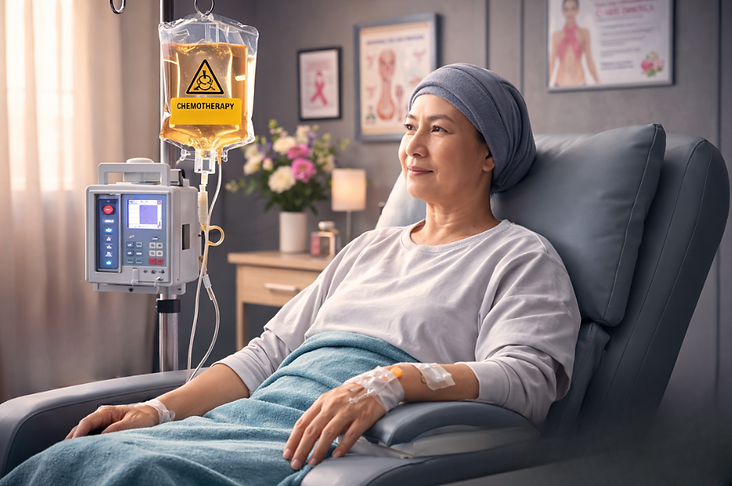
Chemotherapy
➜ Treats Cancer Throughout The Body
Chemotherapy is one of the most established and widely used cancer treatments. It uses drugs that circulate through the bloodstream to destroy cancer cells throughout the body.
When Chemotherapy Is Considered
Chemotherapy may play a major role in treatment when:
1. The cancer is highly sensitive to chemotherapy: Some cancers respond particularly well to chemotherapy. For example:
-
Lymphoma
-
Testicular cancer
2. When cancer cells may exist beyond the visible tumour: Since chemotherapy circulates through the bloodstream, it can treat cancer cells throughout the entire body. It is therefore commonly used:
-
When cancer has spread to other parts of the body (metastatic disease)
-
After surgery or radiotherapy to eliminate remaining microscopic cancer cells
A Common Misunderstanding About Chemotherapy Side Effects (& Antioxidants!)
Chemotherapy works by interfering with the process of cell division and driving cancer cells into programmed cell death (mitotic catastrophic).
Cancer cells grow and divide much faster than most normal cells in the body. Many chemotherapy drugs take advantage of this by damaging the DNA of rapidly dividing cells, often through mechanisms such as free radical–induced DNA injury. When the DNA is significantly damaged, the cell can no longer complete its normal division cycle and will eventually die via apoptosis.

.png)
However, chemotherapy does not only affect cancer cells. Some normal tissues in the body also contain cells that divide quickly. These include cells in the digestive lining, hair follicles, and bone marrow.
When these normal cells are temporarily affected, patients may experience common chemotherapy side effects such as:
-
Digestive tract cells – nausea, vomiting, or diarrhoea
-
Hair follicle cells – hair loss
-
Bone marrow cells – fatigue, lower blood counts, or increased risk of infection
These side effects occur because chemotherapy is targeting rapidly dividing cells, not because the treatment is randomly “toxic” to the entire body.
Understanding this mechanism also explains why certain “high antioxidant supplements” may compromise your treatment. Some chemotherapy drugs rely on free radical damage to disrupt cancer cell DNA. High doses of antioxidant supplements may neutralise these free radicals, potentially reducing the effectiveness of chemotherapy.
For this reason, patients should always discuss any supplements with their oncologist before taking them during treatment.

Radiotherapy
➜ Uses Targeted Radiation to Destroy Tumours
Radiotherapy uses high-energy radiation to damage the DNA of cancer cells, preventing them from growing and dividing.
Unlike chemotherapy, radiotherapy is usually highly targeted, focusing radiation precisely on the tumour while minimising damage to surrounding healthy tissues.
When Radiotherapy Is Considered
Radiotherapy may be recommended in several situations:
-
As a primary treatment for radiosensitive cancers such as nasopharyngeal cancer (NPC)
-
When surgery is not suitable (ie. in elderly patients or when the tumour is in a difficult location)
-
After surgery to eliminate remaining microscopic cancer cells and reduce the risk of local recurrence
-
Before surgery to downsize tumours, commonly in rectal cancer
-
For symptom control (palliative treatment) in advanced cancers, such as pain, bleeding and mechanical obstruction
Modern Precision Radiotherapy Technologies
Advances in technology now allow radiation to be delivered with much higher precision. Examples include:
-
IMRT – Intensity-Modulated Radiotherapy
-
IGRT – Image-Guided Radiotherapy
-
SRS / SBRT – Stereotactic Radiotherapy
These techniques allow radiation to delivered in higher dose more accurately, focusing on the tumour while minimising damage to surrounding tissues.

Hormone therapy
Hormone therapy is used for cancers that depend on hormones to grow.
Instead of directly killing cancer cells like chemotherapy (cytotoxic), it blocks or reduces hormone signals that stimulate cancer growth, keeping cancer cells inactive rather than destroying them (cytostatic).
-
Pros: Causes fewer immediate side effects because it does not trigger widespread cell death.
-
Cons: Usually not sufficient to be used as standard therapy to achieve curative intent.
Cancers Commonly Treated with Hormone Therapy
Hormone therapy is commonly used for:
• Breast cancer that is hormone receptor positive (ER or PR positive)
• Prostate cancer
• Neuroendocrine tumours

Immunotherapy
Immunotherapy is a newer treatment approach that works by helping the body’s immune system re-recognise and attack cancer cells.
Normally, cancer cells develop ways to evade (hide) from the immune system. Immunotherapy works by “removing these disguises”, allowing our host immune cells to re-recognise, detect and destroy the cancer cells.
Cancers Commonly Treated with Immunotherapy
Immunotherapy is now used in several cancers, including:
· Lung cancer
· Melanoma
· Kidney cancer
· Some colorectal cancers
How To Determine If Immunotherapy Is Suitable For You
Immunotherapy is not always suitable for every cancer type or every patient. Careful patient selection is important because even for similar cancer/tumour type, treatment responsiveness and effectiveness may vary widely between individuals.
To determine whether immunotherapy is likely to benefit a patient, oncologists often perform biomarker or receptor testing before starting treatment.
-
If the predicted response is high, immunotherapy may be used as a primary treatment.
-
If the predicted response is low, it may be combined with other treatment options or avoided.
This helps ensure the treatment is used where it is most beneficial, and prevents patients from wasting time and money if the therapy offers little benefit.
P/S: Many patients believe they can “boost their immune system” through good nutrition, a healthy lifestyle, or supplements and therefore improve the effectiveness of immunotherapy. However, this is not medically correct. While maintaining good nutrition and a healthy lifestyle helps support overall health and reduces the risk of infections, allowing cancer treatments to proceed without interruption, it does not directly increase the effectiveness of immunotherapy itself.
My Clinical Perspective
As An Oncologist

Many patients focus on finding a treatment with the least side effects. However, in oncology, the key question is different:
"Which treatment can achieve the best disease control while maintaining acceptable safety & life quality for the patient?"
Each cancer behaves differently. Even with the same cancer type and treatment, outcomes may still differ due to genetic variations and other factors. This is why treatment plans are always individualised based on the biology of the disease and the patient’s overall condition.
The same treatment may be very effective for one cancer but less useful for another due to genetic variations and many other factors. This is why cancer treatment plans are always individualised, based on the biology of the disease and the condition of the patient.
The goal is not simply to choose the “easiest” treatment, but the most appropriate treatment for that specific cancer and that specific patient.
Types of Oncologists
Different Oncologists Treat Different Cancers
Cancer care often involves several specialist working together. In practice, cancer treatment is rarely managed by a single doctor. Most cases are discussed in multidisciplinary teams where surgeons, oncologists, radiologists, and pathologists review the case together before deciding on treatment.
Medical Oncologist
Medical oncologists focus primarily on systemic cancer treatments, which are medicines that travel through the bloodstream to treat cancer throughout the body.
These treatments may include:
• chemotherapy
• targeted therapy
• immunotherapy
• hormone therapy
Radiation Oncologist
Radiation oncologists specialise in treating cancer using radiotherapy.
Radiotherapy uses high energy radiation to destroy cancer cells while minimising damage to surrounding normal tissue. Radiation oncologists plan and deliver treatments using specialised technology such as:
1. Standard conventional radiation
2. Conformal 3D radiation
3. Precision radiotherapy
-
intensity modulated radiotherapy (IMRT)
-
image guided radiotherapy (IGRT)
-
stereotactic radiotherapy (SRS / SBRT)
Surgical Oncologist
Surgical oncologists are surgeon who sub-specialise in the surgical removal of tumours and usually do not involve in prescribing chemotherapy or radiation.
Surgery is often one of the main treatments for cancers that are still localised and have not spread extensively. Depending on the type of cancer, different surgeons may perform cancer-related operations. Examples include:
-
breast and endocrine surgeons for breast cancer
-
colorectal surgeons for colon and rectal cancer
-
hepatobiliary and pancreatic surgeons for liver and pancreatic cancers
-
thoracic surgeons for lung and mediastinal cancers
-
neurosurgeon for brain and spine tumour
-
gynaeoncologist for tumour-related to female reproductive organ
P/S: In countries such as the United States, Taiwan, and Singapore, cancer treatment roles are usually separated between medical oncologists and radiation oncologists, who work closely with surgeons to coordinate a comprehensive treatment plan.
➜ Medical Oncologist + Radiation Oncologist + Surgeon = Comprehensive Treatment Plan
Clinical Oncologist in Malaysia
In Malaysia, however, clinical oncologists typically manage both systemic drug treatments and radiotherapy, combining roles that are divided between medical oncologists and radiation oncologists in some countries.
➜ Clinical Oncologist = Medical Oncologist + Radiation Oncologist
In many cases, the clinical oncologist acts as the master strategist who plans and coordinates the overall treatment plan, working together with surgeons, radiologists, pathologists, and other specialists.
Cancer Treatment and Oncology
in Johor Bahru (JB)
For patients searching for an oncologist in Johor Bahru, it is helpful to understand how cancer care is structured locally. Compared with metropolitan cities such as Kuala Lumpur, Johor has a relatively small number of practising oncologists.
Hence, cancer care in Johor is mainly concentrated in Johor Bahru, which serves as the primary oncology hub for southern Malaysia. Patients from districts such as Batu Pahat, Muar, Kluang, Segamat, and Kota Tinggi often travel here for consultations and tre
Cancer care in Johor typically involves multidisciplinary collaboration between surgeons, clinical oncologists, radiologists, pathologists, and other specialists across both government and private hospitals.
Oncologists in Johor Bahru (JB)
How to Choose the Best-Suited Oncologist for Your Cancer Type
When patients search for the best oncologist in Johor Bahru, what they usually mean is finding a doctor who is experienced in managing their specific type of cancer.
Cancer care is highly specialised, and different oncologists may have more experience in certain areas depending on the cases they commonly treat.
Here are a few factors patients may consider when choosing an oncologist:
1. Experience With Your Type of Cancer
Some oncologists see a higher number of specific cancers such as breast cancer, lung cancer, or colorectal cancer. Experience with a particular cancer type can help guide treatment decisions and anticipate potential complications.
➜ What you can do: Prepare a list of questions before your consultation. An experienced oncologist should be able to explain your diagnosis, treatment options, and possible outcomes clearly in a way that you and your family can understand. At the end of the consultation, ask yourself a simple question: Do you feel comfortable and confident in the plan discussed? Building strong trust with your oncologist is important because he or she will be your partner throughout your cancer treatment journey.
2. Access to Multidisciplinary Care
Cancer treatment often involves collaboration between multiple specialists such as:
-
surgeons
-
radiologists
-
pathologists
-
radiation oncologists
-
intervention oncologists
Hospitals that run multidisciplinary tumour boards allow different specialists to review complex cases together. In more complicated situations, a broader range of sub-specialists may be needed to manage different aspects of the disease.
➜ What you can do: Ask whether your case will be discussed in a multidisciplinary tumour board, where different specialists review the diagnosis and treatment plan together, and which doctors are involved in the discussion.
3. Available Treatment Facilities
Some treatments require specialised facilities, such as:
-
chemotherapy infusion centres
-
advanced radiotherapy equipment
-
molecular testing for targeted therapy
Access to these services can influence where patients receive treatment.
➜ What You Can Do: Check whether the hospital has the facilities and subspecialty services needed for your treatment, or whether referral to another centre may be required for certain therapies.
Major Cancer Treatment Centres in Johor Bahru (JB)
Cancer treatment in Johor Bahru is mainly provided through government hospitals and private hospitals, each serving different patient needs. Government hospitals manage a large proportion of cancer cases in the state, while private hospitals often provide faster access to consultations and treatments.
Government Hospitals
Two major public hospitals provide oncology-related services in Johor Bahru.
-
Hospital Sultan Ismail ➜ Main hub for oncology service in Southern Malaysia
Located in Johor Bahru, this hospital serves as a major oncology referral centre for the southern region of Malaysia, providing treatments such as chemotherapy, radiotherapy, targeted therapy, and palliative care.
-
Hospital Sultanah Aminah
This is the largest government hospital in Johor and the main tertiary referral hospital for the state, receiving a high volume of patients requiring specialised medical care. Many complex medical and surgical cancer cases in the state are managed here.
Government hospitals typically manage a large proportion of cancer cases in the state, although waiting times for consultations and treatment may sometimes be longer due to patient volume.


Hospital Sultan Ismail
Hospital Sultanah Aminah
Private Hospitals
Several private hospitals in Johor Bahru provide oncology consultations and cancer treatment services. These hospitals differ in terms of location, facilities, and specialist availability.
-
Gleneagles Hospital Medini
-
KPJ Johor Specialist Hospital
-
KPJ Puteri Specialist Hospital
-
Regency Specialist Hospital

Gleneagles Medini Hospital Johor

KPJ Johor Specialist Hospital

Regency Specialist Hospital

KPJ Puteri Specialist Hospital
Across these four major private hospitals in Johor Bahru, there are less than 10 practising oncologists, with many of them practising across multiple hospitals. These centres typically offer services such as oncology consultations, chemotherapy treatment, diagnostic imaging, and supportive cancer care.
For many patients in Johor, the choice of hospital is often guided by which hospital their surgeon or referring doctor works with, as cancer care frequently involves collaboration between multiple specialists.
Emerging Cancer Centres
Johor is also expanding its oncology capacity with new facilities such as Tunku Laksamana Johor Cancer Centre, which aims to provide advanced cancer care including chemotherapy and radiotherapy services.
Important Note!
Cancer treatment involves complex medical care, and patients may understandably search widely for treatment options. Unfortunately, there are many unregulated centres in Johor Bahru that may promote “advanced cancer therapies” or "special cancer diets" that are not evidence based, often taking advantage of patients’ desperation.
➜ What you can do: Before starting any treatment, patients should ensure that:
-
The hospital or medical centre is registered with the Ministry of Health Malaysia (MOH) link.
-
The doctor is a licensed specialist, which can be verified through the National Specialist Register (NSR) link.
-
The treatment offered follows recognised clinical practice guidelines, such as NCCN link or ESMO link.
If any of these cannot be verified for whatever reason, patients should exercise caution and carefully check the credentials. Seeking care from accredited hospitals helps ensure that treatment is safe, regulated, and evidence-based.
Frequently Asked Questions (FAQs)
Do You Need a Referral to
See An Oncologist in Malaysia?
Many patients are unsure whether they need a referral before seeing an oncologist. In Malaysia, the pathway can vary depending on the healthcare setting.
In government hospitals, patients are usually referred by a general practitioner or another specialist before seeing an oncologist.
In private hospitals, patients may sometimes make an appointment directly with an oncologist, although referrals from other doctors are still common after an initial diagnosis.
Often the first doctor involved in cancer diagnosis may be a surgeon, gastroenterologist, respiratory physician, or gynaecologist, depending on the symptoms. After diagnostic tests confirm cancer, the patient may then be referred to an oncologist for further treatment planning.
Frequently Asked Questions (FAQs)
When Should You
See An Oncologist?
Some patients believe they should only see an oncologist when cancer becomes advanced. In reality, oncologists are often involved early in the treatment planning process.
Consulting an oncologist is important when:
• a biopsy confirms cancer
• treatment options such as chemotherapy or radiotherapy need to be considered
• the cancer stage needs to be assessed
• multiple treatment approaches are being discussed
Early involvement of an oncology team helps ensure that the treatment plan is properly coordinated between surgeons, radiologists, and other specialists.
Frequently Asked Questions (FAQs)
What Questions Should You
Ask Your Oncologist?
After a cancer diagnosis, patients often feel overwhelmed during the first consultation with their oncologist. Preparing a few key questions can help make the discussion more productive.
Some useful questions include:
• What type of cancer do I have?
• What stage is the cancer?
• What treatment options are available for my condition?
• What are the goals of treatment?
• What side effects should I expect?
Understanding these issues helps patients participate actively in treatment decisions.
Finding the right oncologist can feel overwhelming at the beginning of a cancer diagnosis. Understanding the available specialists, treatment options, and hospitals can help patients make more informed decisions.
Seeking advice from qualified medical professionals and accredited healthcare institutions ensures that treatment decisions are based on evidence-based medicine and appropriate clinical guidance.
About the Author
This article is written by Dr Teo Yin Keong, a clinical oncologist practising in Johor Bahru who treats patients with a range of cancers including breast, lung, colorectal, and other solid tumours. His work focuses on helping patients understand their diagnosis clearly so they can make informed treatment decisions based on medical evidence and their personal goals.
Through TEOncology, Dr Teo also shares educational content to help patients and families better understand cancer, treatment options, and the realities of cancer care.